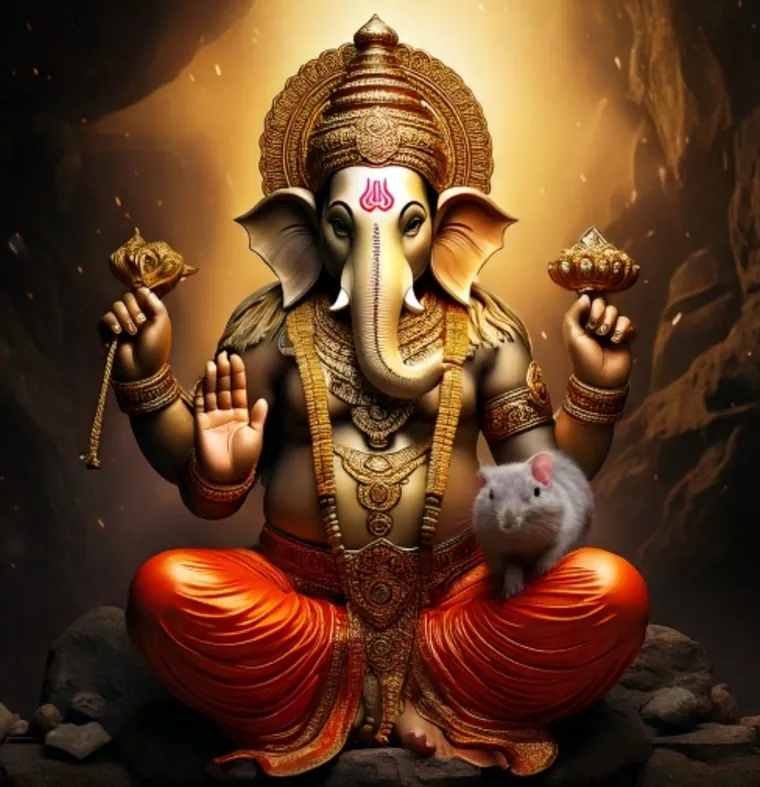
Doha
जय गणपति सदगुण सदन, कविवर बदन कृपाल।
विघ्न हरण मंगल करण, जय जय गिरिजालाल॥
Jai ganpati sadgun sadan, kavivar badan kripāl |
Vighna haran mangal karan, jai jai girijālāl ||
Victory to Ganeshji, home of every virtue, eloquent of speech and kind; remover of obstacles and maker of good fortune, victory to the darling of Girija.
Chaupai 1–4
जय जय जय गणपति गणराजू। मंगल भरण करण शुभ काजू॥
जय गजबदन सदन सुखदाता। विश्व विनायक बुद्धि विधाता॥
वक्र तुण्ड शुचि शुण्ड सुहावन। तिलक त्रिपुण्ड भाल मन भावन॥
राजत मणि मुक्तन उर माला। स्वर्ण मुकुट शिर नयन विशाला॥
Jai jai jai ganpati ganrājū | Mangal bharan karan shubh kājū ||
Jai gajbadan sadan sukhdātā | Vishva vināyak buddhi vidhātā ||
Vakra tund shuchi shund suhāvan | Tilak tripund bhāl man bhāvan ||
Rājat mani muktan ur mālā | Svarna mukut shir nayan vishālā ||
Victory to Ganeshji, king of the ganas, who fills life with blessings and makes every task auspicious. Victory to the elephant-faced giver of joy, Vinayaka of the world and creator of wisdom. His curved trunk is lovely, and the three-line tilak on his brow delights the mind. A garland of gems and pearls shines on his chest, a golden crown on his head, and his eyes are wide.
Chaupai 5–8
पुस्तक पाणि कुठार त्रिशूलं। मोदक भोग सुगन्धित फूलं॥
सुन्दर पीताम्बर तन साजित। चरण पादुका मुनि मन राजित॥
धनि शिव सुवन षडानन भ्राता। गौरी ललन विश्व-विख्याता॥
ऋद्धि-सिद्धि तव चंवर सुधारे। मूषक वाहन सोहत द्वारे॥
Pustak pāni kuthār trishūlam | Modak bhog sugandhit phūlam ||
Sundar pītāmbar tan sājit | Charan pādukā muni man rājit ||
Dhani Shiv suvan shadānan bhrātā | Gaurī lalan vishva-vikhyātā ||
Riddhi-siddhi tav chanvar sudhāre | Mūshak vāhan sohat dvāre ||
In his hands are a book, an axe and a trident; he is offered modak and fragrant flowers. A beautiful yellow cloth adorns his body, and his sandalled feet shine in the minds of sages. Blessed son of Shivji and brother of six-faced Kartikeya, darling of Gauri, famous through the world: Riddhi and Siddhi wave whisks over him, and his mouse mount waits at the door.
Chaupai 9–12
कहौं जन्म शुभ कथा तुम्हारी। अति शुचि पावन मंगलकारी॥
एक समय गिरिराज कुमारी। पुत्र हेतु तप कीन्हा भारी॥
भयो यज्ञ जब पूर्ण अनूपा। तब पहुँच्यो तुम धरि द्विज रूपा॥
अतिथि जानि कै गौरी सुखारी। बहुविधि सेवा करी तुम्हारी॥
Kahaun janma shubh kathā tumhārī | Ati shuchi pāvan mangalkārī ||
Ek samay girirāj kumārī | Putra hetu tap kīnhā bhārī ||
Bhayo yagya jab pūrna anūpā | Tab pahunchyo tum dhari dvij rūpā ||
Atithi jāni kai Gaurī sukhārī | Bahuvidhi sevā karī tumhārī ||
I tell the auspicious story of your birth, most pure, holy and blessed. Once the daughter of the mountain king performed great austerities for a son. When her matchless sacrifice was complete, you came in the form of a Brahmin. Knowing you to be a guest, Gauri joyfully served you in many ways.
Chaupai 13–16
अति प्रसन्न ह्वै तुम वर दीन्हा। मातु पुत्र हित जो तप कीन्हा॥
मिलहि पुत्र तुहि, बुद्धि विशाला। बिना गर्भ धारण यहि काला॥
गणनायक गुण ज्ञान निधाना। पूजित प्रथम रूप भगवाना॥
अस कहि अन्तर्धान रूप ह्वै। पलना पर बालक स्वरूप ह्वै॥
Ati prasanna hvai tum var dīnhā | Mātu putra hit jo tap kīnhā ||
Milahi putra tuhi, buddhi vishālā | Binā garbh dhāran yahi kālā ||
Gannāyak gun gyān nidhānā | Pūjit pratham rūp bhagvānā ||
As kahi antardhān rūp hvai | Palnā par bālak svarūp hvai ||
Well pleased, you granted the boon for which the Mother had done penance: 'You shall have a son of great wisdom, at this very time, without bearing him in the womb: leader of the ganas, treasury of virtue and knowledge, the form of God worshipped first.' Saying this you vanished, and appeared as a child in the cradle.
Chaupai 17–20
बनि शिशु रुदन जबहिं तुम ठाना। लखि मुख सुख नहिं गौरि समाना॥
सकल मगन, सुखमंगल गावहिं। नभ ते सुरन, सुमन वर्षावहिं॥
शम्भु, उमा, बहु दान लुटावहिं। सुर मुनिजन, सुत देखन आवहिं॥
लखि अति आनन्द मंगल साजा। देखन भी आये शनि राजा॥
Bani shishu rudan jabahin tum thānā | Lakhi mukh sukh nahin gauri samānā ||
Sakal magan, sukhmangal gāvahin | Nabh te suran, suman varshāvahin ||
Shambhu, Umā, bahu dān lutāvahin | Sur munijan, sut dekhan āvahin ||
Lakhi ati ānand mangal sājā | Dekhan bhī āye Shani rājā ||
When, as an infant, you began to cry, Gauri's joy at seeing your face knew no bounds. Everyone rejoiced and sang songs of blessing, and the gods showered flowers from the sky. Shambhu and Uma gave gifts freely, and gods and sages came to see the child. Seeing the great joy and celebration, King Shani too came to look.
Chaupai 21–24
निज अवगुण गुनि शनि मन माहीं। बालक, देखन चाहत नाहीं॥
गिरिजा कछु मन भेद बढ़ायो। उत्सव मोर, न शनि तुहि भायो॥
कहन लगे शनि, मन सकुचाई। का करिहौ, शिशु मोहि दिखाई॥
नहिं विश्वास, उमा उर भयऊ। शनि सों बालक देखन कहयऊ॥
Nij avgun guni Shani man māhīn | Bālak, dekhan chāhat nāhīn ||
Girijā kachhu man bhed badhāyo | Utsav mor, na Shani tuhi bhāyo ||
Kahan lage Shani, man sakuchāī | Kā karihau, shishu mohi dikhāī ||
Nahin vishvās, Umā ur bhayaū | Shani son bālak dekhan kahyaū ||
Mindful of the harm in his own gaze, Shani Dev did not want to look at the child. Girija was hurt and said, 'Does my celebration not please you, Shani Dev?' Shani Dev, uneasy, replied, 'What will you gain by showing me the child?' Uma did not believe him and asked Shani Dev to look at the baby.
Chaupai 25–28
पड़तहिं शनि दृग कोण प्रकाशा। बालक सिर उड़ि गयो अकाशा॥
गिरिजा गिरीं विकल ह्वै धरणी। सो दुःख दशा गयो नहिं वरणी॥
हाहाकार मच्यो कैलाशा। शनि कीन्हों लखि सुत को नाशा॥
तुरत गरुड़ चढ़ि विष्णु सिधायो। काटि चक्र सो गज सिर लाये॥
Padtahin Shani drig kon prakāshā | Bālak sir udi gayo akāshā ||
Girijā girīn vikal hvai dharnī | So dukh dashā gayo nahin varnī ||
Hāhākār machyo kailāshā | Shani kīnhon lakhi sut ko nāshā ||
Turat garud chadhi Vishnu sidhāyo | Kāti chakra so gaj sir lāye ||
As soon as the light of Shani Dev's glance fell on him, the child's head flew off into the sky. Girija fell to the ground in anguish, a grief that cannot be described. A cry of sorrow rose in Kailash, for Shani Dev's look had destroyed the son. At once Bhagwan Vishnu set out on Garuda, and with his discus brought back an elephant's head.
Chaupai 29–32
बालक के धड़ ऊपर धारयो। प्राण मन्त्र पढ़ि शंकर डारयो॥
नाम गणेश शम्भु तब कीन्हे। प्रथम पूज्य बुद्धि निधि, वर दीन्हे॥
बुद्धि परीक्षा जब शिव कीन्हा। पृथ्वी कर प्रदक्षिणा लीन्हा॥
चले षडानन, भरमि भुलाई। रचे बैठ तुम बुद्धि उपाई॥
Bālak ke dhad ūpar dhāryo | Prān mantra padhi Shankar dāryo ||
Nām Ganesh Shambhu tab kīnhe | Pratham pūjya buddhi nidhi, var dīnhe ||
Buddhi parīkshā jab Shiv kīnhā | Prithvī kar pradakshinā līnhā ||
Chale shadānan, bharmi bhulāī | Rache baith tum buddhi upāī ||
He set it on the child's body, and Shankar recited the mantra of life over him. Shambhu then named him Ganeshji and blessed him as the first to be worshipped and the treasury of wisdom. When Shiva tested their wisdom by asking his sons to circle the earth, six-faced Kartikeya rushed off in confusion, while you sat and thought of a wiser way.
Chaupai 33–36
चरण मातु-पितु के धर लीन्हें। तिनके सात प्रदक्षिण कीन्हें॥
धनि गणेश कहि शिव हिय हरषे। नभ ते सुरन सुमन बहु बरसे॥
तुम्हरी महिमा बुद्धि बड़ाई। शेष सहसमुख सके न गाई॥
मैं मतिहीन मलीन दुखारी। करहुँ कौन विधि विनय तुम्हारी॥
Charan mātu-pitu ke dhar līnhen | Tinke sāt pradakshin kīnhen ||
Dhani Ganesh kahi Shiv hiy harshe | Nabh te suran suman bahu barse ||
Tumharī mahimā buddhi badāī | Shesh sahasmukh sake na gāī ||
Main matihīn malīn dukhārī | Karhun kaun vidhi vinay tumhārī ||
You held your mother's and father's feet and walked around them seven times. 'Blessed is Ganeshji,' said Shivji with a glad heart, and the gods showered flowers from the sky. Even thousand-mouthed Shesha cannot sing the greatness of your wisdom; how can I, dull, impure and troubled, praise you?
Chaupai 37–40
भजत रामसुन्दर प्रभुदासा। जग प्रयाग, ककरा, दुर्वासा॥
अब प्रभु दया दीन पर कीजै। अपनी शक्ति भक्ति कुछ दीजै॥
Bhajat Rāmsundar prabhudāsā | Jag Prayāg, kakrā, Durvāsā ||
Ab prabhu dayā dīn par kījai | Apnī shakti bhakti kuchh dījai ||
Your servant Ramsundar sings your praise, as do Prayag, Kakra and Durvasa. Now, Lord, be kind to this humble one and grant me some of your strength and devotion.
Doha
श्री गणेश यह चालीसा, पाठ करै कर ध्यान।
नित नव मंगल गृह बसै, लहे जगत सन्मान॥
सम्बन्ध अपने सहस्र दश, ऋषि पंचमी दिनेश।
पूरण चालीसा भयो, मंगल मूर्ति गणेश॥
Shrī Ganesh yah chālīsā, pāth karai kar dhyān |
Nit nav mangal grih basai, lahe jagat sanmān ||
Sambandh apne sahasra dash, rishi panchamī dinesh |
Pūran chālīsā bhayo, mangal mūrti Ganesh ||
Whoever recites this Chalisa of Shri Ganesha with attention will find new blessings in the home every day and be honoured by the world. Completed in the year one thousand and ten of its era, on Rishi Panchami: the Chalisa of Ganeshji, form of all that is auspicious, is complete.
 Jai Ganesh Deva
 Aarti Kunj Bihari Ki